"Spirit" courtesy of Evelyn M. of Landscape Clipart (on Pintrest)
It is possible for a spirit to communicate directly with a living person, such as a bereaved loved one. The person may sense a presence, hear a voice, or see a vision. Typically, the person feels a sense of connection and receives messages of reassurance, comfort, or resolution. Such communications are quite common. According to a 2023 Pew Research Center report, half of U.S. adults (53%) say they’ve been visited by a dead family member in a dream or some other form.
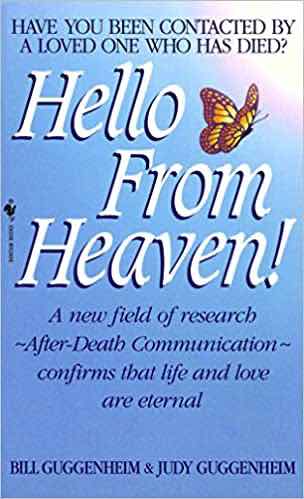
The term “after-death communication” (ADC) was introduced and popularized by Bill and Judy Guggenheim in their 1995 book Hello from Heaven!, which is featured in the Science-Based Awakening Library, below. However, this term can be misleading since it excludes spirit communication through an intermediary such as a medium, who effectively facilitates after-death communication by serving as a link between spirits and the living. I have titled this resource page Direct After-Death Communication to clarify that it excludes intermediaries.
Note: The terms “medium” and “mediumship” have been in use since the 19th-century Spiritualism movement. For more information, see the Mediumship resource page.
Possible Elements of Direct After-Death Communications (DADC)
Manifestations of after-death communications are varied. They include one or more of the following:
Sensing a presence: A distinct feeling that the deceased is nearby, even without seeing or hearing them.
Hearing a voice: Hearing the voice of the deceased, either externally or within the mind.
Feeling a touch: Experiencing a physical sensation, such as a hug or touch, from the deceased.
Smelling a fragrance: Detecting a familiar scent associated with the deceased, such as their perfume or aftershave.
Visual experiences: Seeing the deceased, ranging from partial to full visualizations.
Dreams and visitations: Vivid and realistic dreams of the deceased that feel different from ordinary dreams.
Symbolic experiences: Encountering symbols such as coins, feathers, or birds that hold personal meaning and are interpreted as messages.
Electronic phenomena: Lights flickering, electronic devices acting erratically, or receiving phone calls without a clear explanation.
Some people may dismiss these experiences as imaginary or coincidence, but it is helpful to remember that the majority of U.S. adults believe they are real. Research suggests that DADCs are often perceived as positive and comforting for the bereaved; DADCs also reduce the fear of death, increase belief in an afterlife, and aid in the grieving process.
Deathbed Visions (DBVs) and Shared-Death Experiences (SDEs)
A deathbed vision (DBV) is a variation of a DADC experience that occurs during the last stage of a person’s dying. During a DBV, the dying person sees and sometimes interacts with deceased loved ones and may also see pleasant scenes. Typically, after a DBV, the dying person’s mood is peaceful and serene.
Accounts of DBVs have been verified by people who were in the presence of the dying person. DBVs are quite common, with studies generally estimating a range of 50% to 80% of dying individuals having them. About 80% to 87% of these visions involved seeing deceased family members or friends.
Note: Death following a deathbed vision differs from a near-death experience (NDE) in which a person’s consciousness leaves the body temporarily and then returns to the body, which then recovers.
A shared death experience (SDE) occurs when someone dies, and a living loved one, caregiver, or bystander reports that they sensed, observed, accompanied, or assisted the dying in their transition into a postmortem existence. The dominant theme of an SDE is a journey or movement, often ascending toward a luminous light. Common themes expressed by experiencers of SDEs (SDErs) are love, understanding, and belonging, as well as strong bonds or connections between the SDErs and the dying person. SDEs have features similar to near-death experiences (NDEs), suggesting that both experiences share a common landscape. There are two types of SDEs: bedside and remote. Bedside SDEs happen when the SDEr is in the same room with the dying; remote SDEs occur when the SDEr is in a different location.
Terminal lucidity is another deathbed phenomenon. It does not involve direct after-death communication; however, it merits mention here. Terminal lucidity occurs in the last stages of a person’s life, often within their last few days, when they suddenly have an unanticipated burst of energy or mental clarity or physical function. For example, this sometimes happens to people with Alzheimer’s, Parkinson’s, or other forms of dementia when they suddenly regain their memories and personalities shortly before death. This can provide a wonderful opportunity for family members and friends to reconnect with the person they knew before their decline into dementia.
General Books about Direct After-Death Communication
Note: I have carefully selected every book in the Science-Based Awakening Library. Their titles are linked to amazon.com, which offers numerous book reviews.
Karen A. Anderson is a bestselling and award-winning author. Her book The Amazing Afterlife of Animals is listed in the Mediumship Science-Based Awaking Library.
The chapters in this book are divided among various metaphysical topics some of which are deathbed visions, apparitions (ghosts), poltrgeist phenomena, and terminal lucidity.
Note: EVP stands for Electronic Voice Phenomena, that is, communication from spirits that can interact with the physical world through electronic devices.
Anabela Cardoso retired as a senior career diplomat to devote her life to Instrumental and Transcommunication (ITC), a method in which communication with spirits of the deceased happen via radio equipment, televisions, computers, phones, and other electronic devices. She has received thousands of communications.
Moody, who coined the term “Near-Death-Experience”, is the world’s leading expert on NDEs. Some of his other books can be found on the Near-Death Experience resource page library under his name.
Originally published in 1971, this book describes the early experiments of
Electronic Voice Phenomenon (EVP) also called Instrumental
TransCommunication (ITC).
Dr. Wills-Brandon has published 13 books including a Publisher’s Weekly bestseller. She has collected nearly 2,000 cases of departing visions and visitations from deceased relatives and friends.
Books about Deathbed Visions (DBVs) and Shared-Death Experiences (SDEs)
Note: Book titles are linked to amazon.com, which offers numerous book reviews.
The author collected content from 1,000 YouTube videos created by people describing their loved ones’ deathbed visions. He states that he is a “Certified Death Doula and 47-year nuclear power official.”
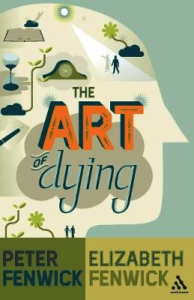
Fenwick, Peter and Elizabeth
The Art of Dying
by Dr. Peter Fenwick, neuropsychiatrist, and Elizabeth Fenwick, 251 pages (2008)
Dr. Kerr is a hospice doctor who draws on interviews with over 1,400 patients. He reveals that pre-death dreams and visions are extraordinary occurrences that humanize the dying process.
Moody, who coined the term “Near-Death-Experience”, is the world’s leading expert on NDEs. Some of his other books can be found on the Near-Death Experience resource page library under his name.