
Chapter 14.
History and Trends in the Christianity/Science Schism
In this chapter, I discuss the origin of the schism between Christianity and science and its impact. The sections are as follows:
Note: CE stands for Common Era, which began with the birth of Jesus.
Early Christianity
After the Roman Catholic Church was established as the state religion of the Roman Empire in 380 CE, the Roman Empire began to crumble, and the Church came to dominate the population. After almost a century, the Roman Empire finally collapsed, and the power vacuum that resulted in western Europe was occupied by the Church.
A Thousand Years of Suppression
Around the time that the Roman Catholic Church was established, it began a long-running conflict with intellectual pursuits. According to Helen Ellerbe in her book The Dark Side of Christian History:
The Church had a devastating impact upon society. As the Church assumed leadership, activity in the fields of medicine, technology, science, education, history, art and commerce all but collapsed. Europe entered the Dark Ages. Although the Church amassed immense wealth during these centuries, most of what defines civilization disappeared…. The losses in science were monumental. In some cases the Christian church’s burning of books and repression of intellectual pursuit set humanity back as much as two millennia in its scientific understanding. [italics added for emphasis]
Inventions are fundamental to science. To see the impact of the Church on the repression of science, we must look at the history of inventions on a worldwide basis. I found Wikipedia’s Timeline of Historic Inventions to be most informative. In the 1st century through the 3rd century CE, the number of inventions in the Roman Empire was about equal to the total number in the rest of the world.

From the late 4th century, when the Catholic Church came into political power, to the end of the 14th century, the introduction of inventions was dominated by China and India. During this period, within the area controlled by the Church, only two significant inventions appeared in Europe (both in the 13th century): the invention of eyeglasses, and the invention of the verge escapement—a primitive balance wheel for controlling the rate of mechanical clocks.

This stagnation continued in Europe until the 15th century, which saw crucial inventions in timekeeping, weaponry, printing, ship building, and navigation. These inventions helped revolutionize European society. For example, the printing press enabled the mass-production of Martin Luther’s Bible translation, which facilitated the expansion of the Protestant Reformation in northern Europe. By the 17th century, the increasing number and variety of inventions had sparked a mechanistic revolution, which was fueled by the perspective that natural phenomena could be explained by mechanical laws.
Geocentrism Versus Heliocentrism
An example of the Church’s repression of science is its suppression of heliocentrism—an astronomical model in which the Earth and other planets revolve around the sun. In the 2nd century CE, Ptolemy, a Greek mathematician and astronomer, had proposed an Earth-centric (geocentric) astronomical model that assumed that the Earth was in a fixed position with the Sun and other bodies revolving around it. Church leaders adopted and promulgated Ptolemy’s model. Throughout the Dark Ages, the Church taught that the Earth (and therefore the Church) was the center of the universe. As a result, the geocentric model (geocentrism) dominated scientific thought for some 1,400 years.
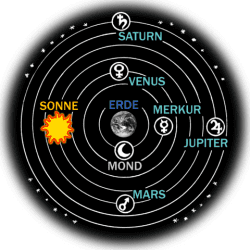
The first formal rejection of the geocentric model in Europe occurred early in the 16th century. In 1532, a Polish mathematician and astronomer, Nicolaus Copernicus, completed his work on a manuscript about his mathematical model of heliocentrism. However, although the Protestant reformation was emerging in Northern Europe, the Catholic Church retained its power in Poland and southern Europe. Fearing repercussions from the Church, Copernicus waited to publish a book about his heliocentric model until just before his death in 1543, thereby avoiding persecution as a heretic. His theory was later condemned as heretical by the Church, and the Roman Inquisition prohibited it.
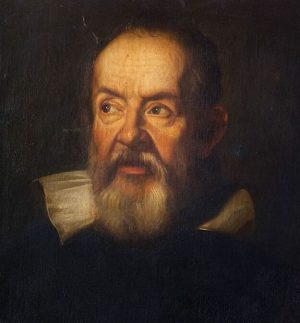
Almost a century after Copernicus’s publication, as the Church still clung to the geocentric model, the Italian astronomer Galileo Galilei built his own telescope and concluded that the Earth and the other planets in our solar system revolve around the sun. Galileo, who has been called the “father” of modern science, published his findings in a book in 1632. He was convicted of heresy and faced the Roman Inquisition. To avoid being tortured, he recanted his claim that the Earth revolves around the sun. Despite his recantation, the Church gave Galileo a life sentence of house arrest; he was confined to his house, where he died in 1642.
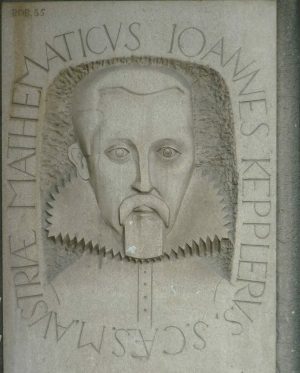
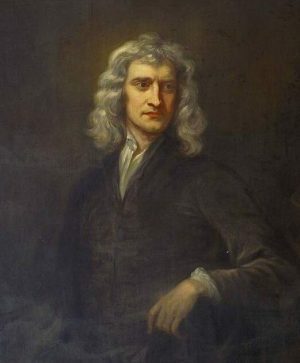
Another key figure in 17th century science was German Johannes Kepler, who, like Copernicus and Galileo, discovered that the Earth revolves around the sun. But unlike his predecessors, Kepler was a Lutheran and, thus, was safe from the Roman Inquisition. His works helped lay the groundwork for Isaac Newton’s theory of universal gravitation, the foundation of classical mechanics, in 1687. Newton’s theory renders everything in the universe predictable. The discoveries by Kepler and Newton undermined the Church’s teachings and authority.
The Age of Enlightenment and Reason
From the late 17th century to the end of the Napoleonic Wars in 1815, Europe experienced the Age of Enlightenment (also known as the Age of Reason). This was an age when advances in scientific knowledge catalyzed the on-going mechanistic revolution. The Age of Enlightenment emphasized rational thinking and the emancipation of the human intellect. Advancements in knowledge and understanding led to the philosophy of rationalism, the view that, “regards reason as the chief source and test of knowledge” (brittanica.com). Rationalism was a new perspective in an era when the general population still placed its trust and beliefs in the Christian religion.
Scientific Materialism
Prior to the 17thcentury, Christian theologians and university scholars taught that the universe was alive, imbued by the Spirit of God, the divine breath of life. All people, animals and plants had souls. Although the key figures in the Scientific Revolution, including the scientists I have mentioned, were all practicing Christians, their scientific view created a vision of the universe as a machine intelligently designed and created by God [italics added for emphasis]. Everything was governed by eternal mathematical laws. This mechanistic theology was revolutionary because it rejected the animistic view of nature (that everything has a spiritual essence), which was taken for granted in Medieval Europe.
According to Rupert Sheldrake, biologist and author, from the perspective of science, the material world became a lifeless, soulless machine. In Science Set Free, Sheldrake states:
Before the mechanistic revolution, there were three levels of explanation: bodies, souls and spirits. Bodies and souls were part of nature. Spirits were non-material but interacted with embodied beings through their souls. The human spirit, or ‘rational soul,’ according to Christian theology, was potentially open to the Spirit of God. After the mechanistic revolution, there were only two levels of explanation: bodies and spirits. Three layers were reduced to two by removing souls from nature, leaving only the human ‘rational soul or spirit.’ The abolition of souls also separated humanity from all other animals, which became inanimate machines. The ‘rational soul’ of man was like an immaterial ghost in the machinery of the human body. …The final step in the mechanistic revolution was to reduce two levels of explanation to one. Instead of the duality of matter and mind, there is only matter. [italics added for emphasis]
After some initial clashes, most notably Galileo’s trial, Christianity and science became increasingly segregated by mutual agreement. Science and Christianity were practiced fairly freely from each other, at least until the emergence of militant atheism at the end of the 18th century. Militant atheists rejected the dualism of materialism and the spiritual realm, recognizing only one reality, the material world. They held that God, spirits and angels were figments of human imagination and that human minds were by-products of brain activity. They espoused scientific materialism, which is the belief that only the material world exists. Though militant atheists were a minority, their influence exerted a strong and lasting effect on scientific communities. Scientific materialism became the dominant world view within institutional science in the second half of the 19th century.
Darwin’s Evolution by Natural Selection
In 1859, Charles Darwin published his On the Origin of Species, which gave compelling evidence of his theory of evolution by natural selection. This theory implicitly downgraded humanity to just another animal species. Darwin believed that the source of creativity was in the animals and plants themselves as they adapted to new circumstances. He attributed all creativity to Nature as the creative force, rejecting the designing God of mechanistic theology. Biological evolution soon became accepted science. In grappling with the existential implications of natural selection, some philosophers and scientists saw, like Darwin, the creativity of Nature herself; others saw divine creativity. In contrast, atheists denied that evolution had any divine activity or purpose.
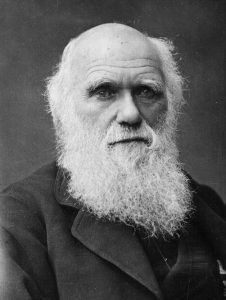

The theory of evolution served to undermine the six-day creation story of Adam and Eve, a pillar of Christian dogma, and as a result brought into question the overall veracity of all Christian dogma including the Bible. Nevertheless, some religious denominations have outright rejected the concept of evolution by natural selection, particularly regarding humans. The 1925 Scopes trial (known as the “monkey trial”) was an example of militant fundamentalists striving to eliminate the teaching of evolution in their public schools.
Darwin’s theory of evolution, while supported by ample evidence, lacked an explanation of the mechanism—genetics. A contemporary of Darwin’s, Gregor Mendel, defined principles of genetic inheritance based on his plant-hybridization experiments and published his principles in 1866. Unfortunately, Darwin was unaware of Mendel’s pioneering work in genetic inheritance. Eventually, on the eve of the 20th century, Mendel’s work received the attention it deserved. In the 1930s and 1940s, the combination of Mendelian genetics with Darwin’s theory of natural selection resulted in the field of evolutionary biology. In the second half of the 20th century, as an expression of scientific materialism, neo-Darwinians claimed that all creativity was exclusively due to random mutations and natural selection.
In a popular video, By Design: Behe, Lennox, and Meyer on the Evidence for a Creator (1:24:29), three eminent scientists engage in a stimulating moderated discussion whose opening question is: “Who’s Dead? God or Charles Darwin?.”
Responses to the Big Bang Theory
In the 1960s the scientific theory of the Big Bang became a mainstream idea. The Big Bang is the prevailing cosmological model. It explains the origin of the universe approximately 13.8 billion years ago and its subsequent evolution.
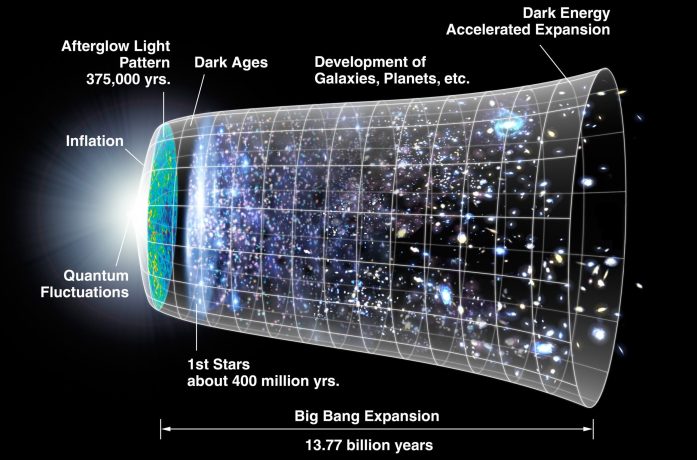
Christians who take a literal, fundamentalist interpretation of the Bible reject the Big Bang theory because it contradicts the Genesis story that God created the Earth in six days. However, other Christians embrace the theory because for them it affirms their belief that God created the world out of nothing.
In an Associated Press-GFK (Growth from Knowledge) poll taken in 2014, a slim majority of American adults—51%—had little or no confidence in the Big Bang theory. Since Christians made up about two thirds of the population, I assume that this slim majority was a reflection of the fundamentalist viewpoint. As one would imagine, there was essentially no doubt about the Big Bang in the scientific community. When the AP-GFK poll was taken, 99.9% of the members of the National Academy of Science believed the universe began with the Big Bang.
Atheists and many agnostics in the 21st century take materialism as a scientific fact, not just a theory. Although not every atheist believes in the Big Bang theory, they all would deny that God or a deity created the universe. Some Christians argue that everything must have a first cause, so therefore the first cause must be God. Atheists counter that argument by asking who created God, and then they point out that in reality there is no reason to postulate a first cause, that it is just an assumption. They can then assert that the universe always existed and that it is purposeless, which is contrary to Christian belief in God as Creator.
Recent Trends
A century ago, Max Planck, a founder of quantum physics, recognized that consciousness underlies all matter:
All matter originates and exists only by virtue of a force…We must assume behind this force the existence of a conscious and intelligent Mind. This Mind is the matrix of all matter…I regard consciousness as fundamental. I regard matter as derivative from consciousness. We cannot get behind consciousness. Everything that we talk about, everything that we regard as existing, postulates consciousness. — Max Planck (1858–1947), Nobel Prize for Physics, 1918
Nonetheless, as science has continued to make dramatic discoveries, the gap between Christian beliefs and the scientific materialism of conventional science has steadily widened. Even though scientists have never demonstrated that the universe consists solely of energy and matter, conventional science still postulates this. Scientific materialism denies the existence of a Creator, souls (the units of consciousness that are often described as individualized consciousness), spirits, the afterlife, and nonphysical realms beyond our physical universe.
Scientific materialism negates the growing body of evidence that a person’s consciousness survives bodily death. The vast majority of neuroscientists in the U.S. embrace the scientific materialism paradigm that postulates that the brain produces consciousness. According to this paradigm, when people die, they no longer exist because their brain no longer produces their consciousness. Scientist, popular author, and leader in consciousness studies, Rupert Sheldrake, has stated that neuroscience has spent billions of dollars attempting to locate the source of consciousness in the brain, which has been and continues to be a futile exercise.
Note: The BeAwake.com Resources area overflows with information that establishes the existence of consciousness and the soul, refuting scientific materialism. Of particular interest is the Unbounded Consciousness resource page.
The Gap Between Christianity and Science Is Narrowing
There are recent positive signs that the gap between science and Christianity may be closing just a bit. These signs include findings in the field of consciousness research and, also, three discoveries in the fields of cosmology and physics, coupled with discoveries in biology. To highlight the possible trend toward bringing science and Christianity somewhat closer together, I have selected two books. One book is from the perspective of consciousness, and the other is from the viewpoint of creation. The authors express their views of the causes and status of the science and Christianity split. First, let’s look at consciousness research.
A Perspective from Consciousness Research
A vast amount of evidence supports the existence of consciousness beyond the brain or what is described as nonphysical consciousness. In a 2025 interview, the Chief Scientist at the Institute of Noetic Sciences, Dean Radin, PhD, states that science is in the midst of a paradigm shift about consciousness; according to Radin, there are, “somewhat over 300 different theories [of consciousness], of which half of them now are not materialistic. That says something is happening. (Dean Radin on The Science of Magic and The Fabric of Reality | Closer to Truth)”
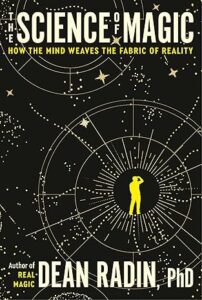
I hold Radin to be the leading authority on nonlocal, non-materialistic consciousness research in North America. In his latest book, The Science of Magic: How the Mind Weaves the Fabric of Reality (2025), Radin views scientific breakthroughs such as quantum mechanics, the mind-body connection, telepathy, and psychokinesis in terms of magic or psychic phenomena (psi). From his scientific perspective, Radin recognizes magic as a mental skill, like meditation. Radin is the author of four bestselling popular books based on consciousness research. For links to all of Radin’s books and several videos featuring him, see Unbounded Consciousness Resources.
A Perspective from Cosmology, Physics, and Biology
Let’s take a snapshot of how recent discoveries in cosmology, physics, and biology point to the existence of a Creative Source. The director of the Center for Science and Culture at the Discovery Institute, in Seattle, Stephen C. Meyer, Ph.D, is a philosopher of science. Meyer is the author of Signature in the Cell, New York Times bestselling Darwin’s Doubt, and more recently, Return of the God Hypothesis, in which he points to three major scientific discoveries that support the existence of a divine creator:
- Cosmological Origins: Evidence shows the universe began from a singularity. This indicates it had a finite past, challenging the idea of an eternal, self-creating universe.
- Fine-Tuning: The fundamental constants and laws of physics (such as electromagnetism and gravity) are precisely calibrated for life, which seems incredibly improbable to have occurred by chance.
- Biological Information: The origin of new, functional, and complex genetic information in DNA, which is necessary for producing new life forms, points to a source that is beyond purely material processes. Meyer describes this perspective in the following video interview: Stephen Meyer on Intelligent Design and The Return of the God Hypothesis (1:00:12).
In Conclusion
Whether actively spiritual or not, certainly everyone on the planet is recognizing that the world is in chaos, a state of crisis. I believe that, beyond a minority of fear-based people who are trying to control the population through distortions and manipulation, nearly everyone on earth is deeply yearning for peace and harmony. More people are becoming spiritually conscious, and I sense that humanity is in the midst of a spiritual shift. You will not read or hear about it in the conventional news. However, people who are seriously pursuing spiritual growth and who are tuned into spirituality-based media typically recognize that a global spiritual shift is happening.
Statistics reflect this shift in the population of the United States. Increasing numbers of Americans are rejecting traditional religion. In 2024, the Pew Research Center published the results of their study of U.S. adults who are religiously unaffiliated and who are called the “nones,” for their nonreligious status. According to this study, the population of nones has grown at a rapid rate. It has increased from 16% of the U.S. population in 2007 to 28% in 2023. Two-thirds of nones say they question a lot of religious teachings or do not believe in God, but most do believe in God or a higher power. About half of the nones think of themselves as spiritual or say spirituality is very important in their lives. Of course, spiritual identities and beliefs are not unique to nones. In fact, by many measures, people who identify with a religion tend to be just as spiritual, or even more spiritual, than nones. A shift toward spirituality could also be evidenced in the latest FBI crime statistics as of 2025. The Bureau reported that violent crime decreased an estimated 4.5% nationally in 2024 compared to 2023. Robbery showed an 8.9% decrease.
The most important aspect of this spiritual shift seems to be the opening of people’s hearts to more love and compassion. If this is, indeed, happening, it alone would be a catalyst for narrowing the Christianity/science schism.